Excavating late human civilization

Sifting the detritus of the late plastocine, archeologists have found that when coffee packaging came to exceed coffee, people recycled a bit to feel better. And not just those Nespresso pods: feeble prayers to angry Gaia included coffee cup “recycling”.

Coffee drinkers were not alone in the production of rubbish that was ceremonially, if not practically, recyclable: excavations along roads of the era find accumulations of McDonald’s coke cups, beer cans, energy drink cans, juice packs, and water bottles. The large quantity of containers for water, sweetened water and water substitutes has been a puzzle for archeologists. Now, the study of these reservoirs of rubbish has led to an improved understanding of the collapse of human civilization, and to an adjustment of the dates at which that the collapse is believed to have started.

The thickness of the strata of containers suggests that while late humans were well (and perhaps over-) hydrated, they had lost the art of plumbing: lead pipes may have done in the Romans, but drink container waste from the early 21st century is consistent with the absence of a reliable domestic supply of potable water – how else can the use and awkward transport of these costly containers be explained? Thus, the growing numbers of discarded bottles, cans and cups as the twentieth century gave way to the twenty-first is now seen as indicative of the loss of much of the basic infrastructure that had been built up over the previous centuries, and suggests that the collapse of human civilization may have begun a century earlier than scholars had previously believed.

Traffic evaporation: are you serious?

Some reflections on shopping, the school run, filters, and the possibility of actual and significant traffic evaporation.

Last night I attended the first of the information sessions for the consultation on the Green Lanes Area Transport Study, and I am afraid I was not always patient. While some people become less temperate when sitting alone at a computer keyboard, but I become more so – I am better able to edit myself. So if any of the project staff who were present at the event reads this, please accept the apologies of the tallish middle-aged American bloke who was exasperated that a large study of traffic has almost nothing to say (except on the one case of Wightman Road) about traffic reduction, and limits its analysis with the assumption that the overall number of car trips is fixed.

I am an economist, and, while economists disagree with one another about many things, our fundamental starting point is that people make choices between alternatives.  Continue reading

But where will the Wood Green traffic go?

Hoisted from comments:

In my post on the Wood Green regeneration plan, I said: “There should be no private motor vehicles on Green Lanes between Wood Green and Turnpike Lane… Traffic along Hornsey Park Road and other N-S routes should be filtered, to eliminate through traffic”. In reply, Joe asks: Continue reading

Green Lanes Consultation: Item by Item

Yesterday I blogged about the severe limitations of the Green Lanes Traffic & Transport consultation. There’s a lot in the consultation, however, much of it pretty good, some of it excellent, and you should answer it. It is long, but comes in several sections (packages), and you only need to answer the ones that interest you. Here are my answers, item by item, with a bit of further explanation.

Package AW: Area-wide improvements

01 Improve streetscape. Support. Mostly simple inoffensive stuff, enforcing rules that already exist. In this spirit, how about also taking out those extra wide new “phone” installations on Green Lanes, which are just Trojan horses for hoardings on busy sections of pavement?

02 Greater provision of car clubs. Strongly support. Makes cars available when needed while discouraging over-use & taking up less space for parking storage. Continue reading

Green Lanes consultation: deference to traffic

New Green Lanes area traffic consultation is now available. There are some good elements to it, worth supporting, and there are tweaks that are worth proposing. The consulation documents outline some complicated and contentious issues concerning bikes and parking on Green Lanes, and what to do with Wightman Road. Overall, however, the proposals are timid: they do not contemplate or attempt any substantial reduction in traffic, which is to say that they don’t really set out to solve the problem the plan is meant to address. Haringey surely can do much better. Continue reading

Wood Green

The Haringey Council has published a set of ‘preferred options’ for Wood Green redevelopment (I’ll call it the Wood Green Plan, or “the plan”). It contains some good ideas but it stumbles badly in two key areas, and is largely silent on a third. The two areas on which it stumbles are open and green space, and road traffic. The area in which it is silent is any for of guarantee for the re-housing of people who would be removed Continue reading

Buses vs. cabs on Oxford Street

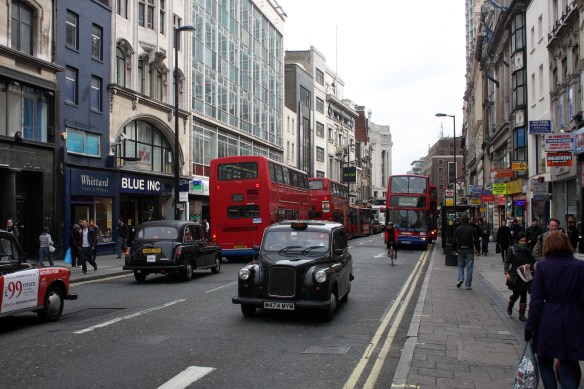
london_cabs_and_buses

Sadiq Khan promised during his campaign to pedestrianize Oxford Street. That would mean no buses or taxis (black cabs, which is to say traditional London taxis, not mini-cabs or Uber), which are the vehicles allowed there now.

I’ve been ambivalent about this plan because there are a lot of buses on Oxford Street and it’s not clear how they could be re-routed, yet a pedestrianized Oxford Street would be a terrific improvement for central London.

In November, the first installment of the plan was unveiled in a Transport for London (TFL) consultation. TFL proposed changes to 17 of the bus routes that now use Oxford Street, perhaps this year. They calculate that these changes will require, every weekday, 17,200 riders who now ride through would need to change buses – that is if, with that added inconvenience and delay, those people keep riding buses at all. That represents a serious deterioration in bus service, but it’s not close to taking all the vehicles off Oxford Street, and actual pedestrianization remains a few years off.

One might say, well, baby steps. Yes, you’ve got to start somewhere, but why here? The fact is that a large share of the motor vehicles on Oxford Street are black cabs. Many of these taxis are dead-heading, no passenger, to the City or a train station. As buses thin out on Oxford Street, they are simply replaced by taxis – the road becomes a magnet for ever more taxis, a grand rat run through the West End. And the November consultation is all about reducing the number of buses, saying nothing about taxis. Continue reading

Buses at Bruce Grove: lack of grip?

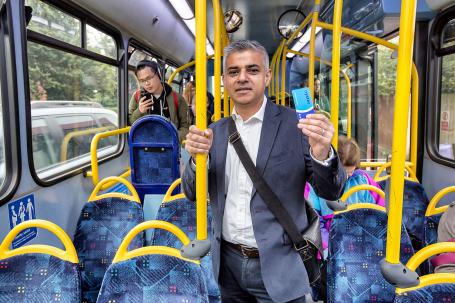
I am careful not to be too optimistic about the future of cycling on London’s roads, but I did have faith that with Khan as mayor, bus service at least was in safe hands. Now I’m not so sure.

sadiq_khan_1_0

Continue reading

Trump & Putin would break EU to block climate action

The Trump-Putin connection can seem just a lurid sideshow in Trump’s horrific circus of racial and religious profiling, misogyny and authoritarianism. And, when that special relationship does catch our attention, the most obvious thing linking the two men (possible videos and blackmail aside) is their common political language of aggressive nationalism.

But this is no sideshow, and much as Trump would like it to be all about him, it is not his personal foible: the agendas of the Republican Party’s petro-backers coincide perfectly with those of the Russian oligarchy, and that is why Trump’s links to Russia were tolerated even before he was elected. The nationalist postures of Trump and Putin, which might seem to be simply ways of rallying some segments of the aggrieved masses to the banners of the countries’ respective caudillos, are instrumental for reshaping the international order in a way favourable to the oil interests.

The overriding need of the oil interests is to block anything that would cut the demand for oil – which is to say, to stymie any serious steps to mitigate climate change. International cooperation is necessary to fight climate change, and aggrieved nationalism undermines international cooperation. The cohesion of the EU is particularly important for international action on climate, and so European integration has become the enemy not only of Moscow, but also of Republican Washington.

Continue reading